Cattle Feed Plant
Mash and pellet cattle feed plants from 7 to 40 TPH, for dairy co-operatives and cattle feed manufacturers.
A cattle plant sized to the throughput you need.
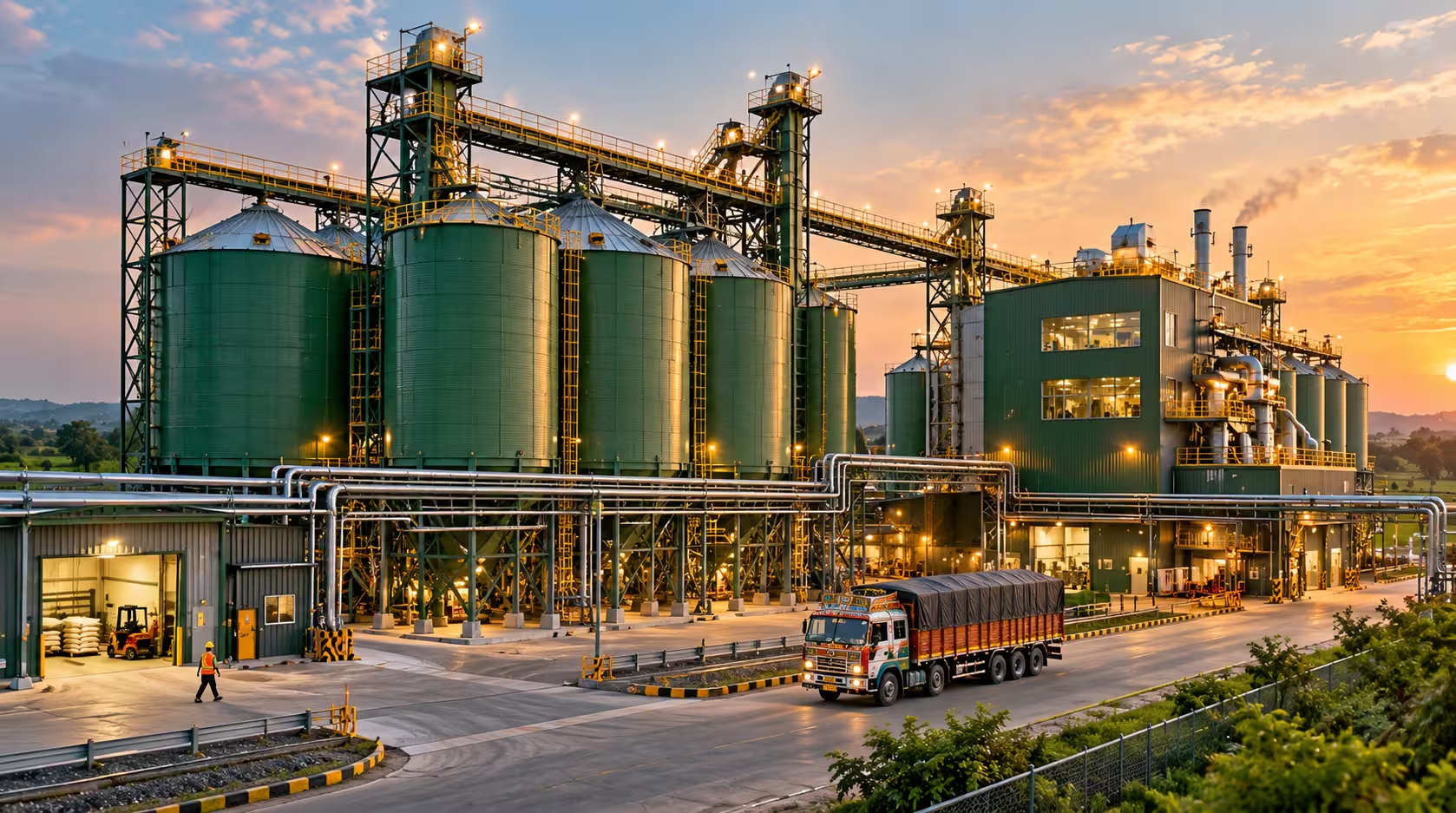
Cattle feed is one of the most common feed mill projects in India. Capacity is set between 7 and 40 TPH, and the feed form - mash or pellet - shapes the whole process.
We start with your throughput, your feed form and your site, then design the line around them. Nothing is oversized to look impressive, and nothing is undersized to save on the first invoice.
The essentials in three lines.
Typical process: intake, grinding, batching and mixing; conditioning, pelleting and cooling for pellets.
From intake to finished feed.
Switch between mash and pellet to see which stages each plant needs.
Process flow - sketch, not to scale
- 01IntakeReceiving raw material
- 02ElevationBucket elevator to the process
- 03GrindingHammer mill
- 04Batching & mixingAccurate batch of each ingredient
- 05ConditioningSteam conditioning before pelletingBypassed
- 06PelletingPellet millBypassed
- 07CoolingCooler and crumblerBypassed
- 08Finished feedMash or pellet, ready to dispatch
Mash plant: the pellet line is not installed. Grinding, batching and mixing lead straight to finished feed.Pellet plant: conditioning, pelleting and cooling are added between mixing and finished feed.
Choose the form before the layout.
Mash plants are simpler and cheaper to build. Pellet plants take more space, more power and more maintenance, but produce a feed form that handles and stores differently. Your choice drives the equipment list.
Read the comparisonIngredients the plant is designed around.
- 01Maize and other cereals
- 02Oilseed meals
- 03Rice bran and by-products
- 04Minerals and additives
- 05Molasses (where used)
Typical materials. The final ingredient list is confirmed with you for each project.
The full project, from feasibility to handover.
Six stages, one accountable team.
- 01
Feasibility and capacity
- 02
Process and layout design
- 03
Civil and structural design
- 04
Equipment selection and supply
- 05
Erection
- 06
Commissioning, training and handover
Site, layout and utilities decide the cost.
Three things to have in mind before you ask for a quote.
Site
Plot size, access for trucks, ground conditions and room to expand later.
Layout
Material flow from intake to dispatch with the least lifting and handling.
Utilities
Electrical load, water and, for pellet plants, steam for conditioning.
Planning a cattle feed plant?
Plan Your Cattle Feed Plant